
Aligoté – Coming Out of the Shadows
Aligoté is a grape variety that in Burgundy has long walked in the shadow of the stars Pinot Noir and Chardonnay. That hasn’t always been the case, and now a growing number of winemakers have rediscovered this grape, which can produce exciting and complex white wines.
Text: Richard Sigray
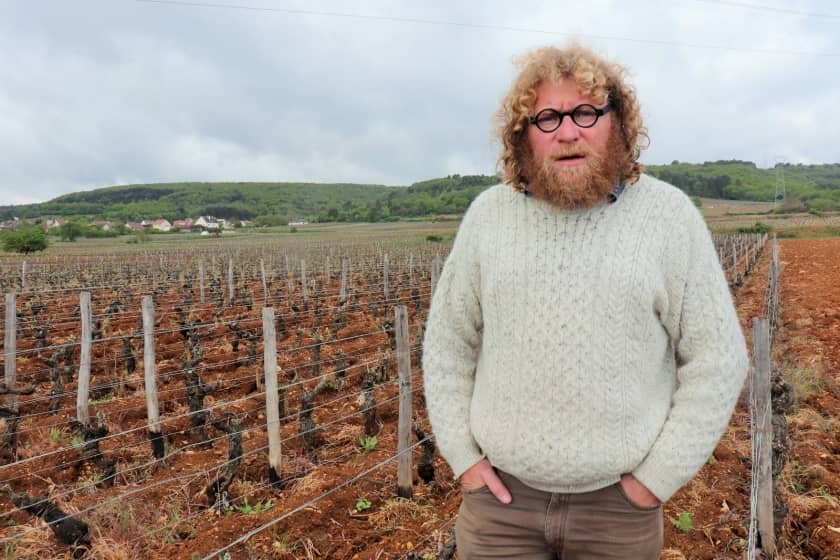
Once upon a time, Aligoté could be found in some of the best plots along the slopes of the Côte d'Or, for example, in Meursault and on the Corton hill. Today, however, it’s usually planted in less prestigious areas. It’s fair to say that Aligoté, in general, has suffered from a poor reputation, largely due to high yields and producers bringing cheap table wines to market. But that’s starting to change.
Winemaker Sylvain Pataille, best known for his Pinot Noirs, is one of the founders of Les Aligoteurs and a leading champion of Aligoté. Based in Marsannay, he firmly believes that Aligoté has the potential to produce world-class wines. Today, he grows around 2.5 hectares of Aligoté across nine parcels.
Why do you think there has been a growing interest in Aligoté among Burgundy wine producers and consumers in recent years?
“People have finally understood that it was a mistake to forget this great variety, which for a long time was made as a simple wine. Chardonnay can also be simple if we don’t work with high standards. As quality has improved, there’s been increased interest from demanding consumers too. Another explanation is that, since producers can now sell Aligoté at a higher price, they can go beyond the cost of return and improve quality by reducing yields, avoiding herbicides, and harvesting by hand. Lastly, Aligoté now offers true value, especially as the prices of other Burgundy wines continue to rise.”
As a grower, how do you compare Aligoté with Chardonnay?
“I don’t see a great difference. Aligoté and Chardonnay are ‘cousins’ with similar characteristics. They mature around the same time. The advantage of Aligoté is perhaps that it accumulates sugars more slowly while maintaining acidity, making it better suited to the higher ripeness levels brought by global warming. Aligoté also shares the slightly vegetal character of Jacquère, Chenin Blanc, and Petit Manseng. These varieties weren’t so popular when the climate was cooler and more humid. With riper grapes today, drinkers are seeking the freshness and minerality that Aligoté can offer.”
How important is the Aligoté Doré clone for making higher-quality wines?
“I believe it’s the yields that make the distinction between Doré and Vert, not genetics. In the lieu-dit Mechalot, there was a parcel of Aligoté planted in the 1960s. In the early years, the owner produced 150 hl/ha, and the grapes were green in color. I bought the vineyard in 2005, and since I’ve never exceeded 30 hl/ha, the grapes from the same vines have turned completely golden. Of course, there are differences between each biotype of Aligoté, but it’s the yields that determine whether the grapes are green or golden.”
What is the idea behind the association Les Aligoteurs?
“The idea behind Les Aligoteurs is to bring together producers who want to put Aligoté in the spotlight. This is achieved by organizing two to three salons (tastings) per year. We must not forget that Aligoté wasn’t as popular 30 years ago as it is today. It was a difficult sell. In addition, the association creates a network among growers where we share ideas, commercial contacts, and statistics – for example, the average cost of return or selling price. All these exchanges help us progress, so that small growers can make a living from Aligoté. Lastly, one important mission now taking shape is the creation of an Aligoté conservatory – something never done before.”
What characteristics of Aligoté wines do you cherish the most?
“Diversity. When I taste at the Aligoteurs salon, I enjoy the short-aged, accessible Aligoté just as much as the terroir-driven or more complex ones. There isn’t just one style. I love that we can drink Aligoté on any occasion!”
Will the interest in Aligoté wines keep rising, or is it bound to remain a niche wine for connoisseurs?
“There are 1,700 hectares of Aligoté in Burgundy, so I don’t think we can consider it niche. But plantings have been decreasing over the last 20 years. I hope prices continue to rise so growers can make ends meet by cultivating Aligoté and perhaps even increase plantings.”